The Road that Conquers Death
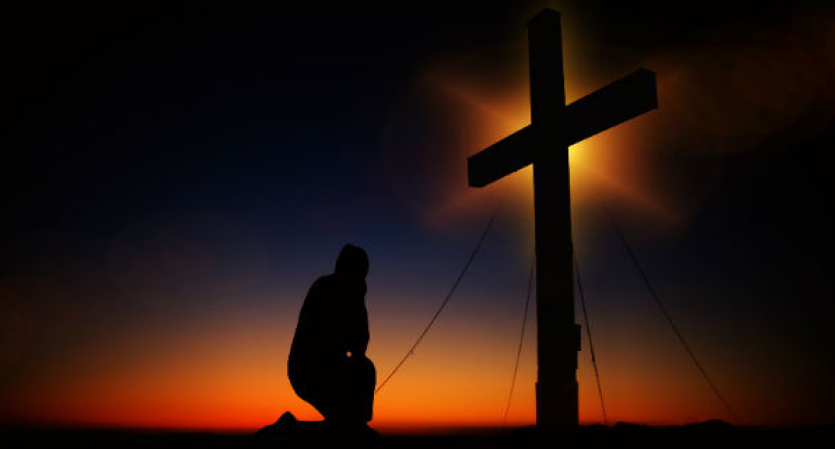 At some point in life, every one of us confronts the questions, “Who am I?” and ”Where am I going? Other questions may be even deeper than this one—for example: “Why am I here? What is the meaning of life?
The Russian novelist Leo Tolstoy put it this way, “What is life for? To die? To kill myself at once? No, I am afraid. To wait for death till it comes? I fear that even more. Then I must live. But what for? In order to die? And I could not escape from that circle.’’ The Bible is the only book that can answer these questions.
The Bible does not say that death is a natural event. In the Bible, death for human beings is not natural. We were not made to die. We were not intended to die, and we rebel against death. We postpone it as long as possible. We do not talk about it because we were not made to die and we know it. Throughout human history, people have refused to accept the finality of death.
Death brings an unacceptable, sudden interruption to one’s work, plans, and relationships. Though the inscription on many tombstones reads ‘Rest in Peace,’ the fact of the matter is that most people do not welcome the peaceful rest of the grave. They would rather be alive and productive. To conquer death is man’s greatest hope, and therefore also his final and overarching purpose. Most of us want to live as long as possible. There are, however, very few who succeed in living very long.
The Bible mentions several people who became extraordinarily old. Even in our times, it sometimes happens that a person succeeds in evading death for an astoundingly long time. One of the most astonishing examples of this is the Chinese Lee Cheng-yuen, who reportedly died in 1930 at the age of 252.
Emperor Shih Wan Ti looked desperately for a magic potion for longevity, while the Egyptian monarchs built their pyramids and placed household utensils in graves because of a wistful hope that death is not the final end of all life. This hope is not only an historical phenomenon, but also the hope of modern man who still considers a recipe for immortality as the most important goal of the humanistic ideal, the so-called ‘New World.
Death is an enemy, so we try not to talk about it. We do not like facing it. It is the unmentionable subject today, because it is not natural, it is a judicial event, and we are all guilty and deserve to die, and God has said to us, ‘You will die.’ He told Adam that, right in the Garden of Eden. ‘The day you disobey me, you will die.’ So, any death, whether early or late, is a judicial event; or, to put it bluntly, it is an execution of someone who does not deserve to live.
It is therefore not surprising that the subject of death and the afterlife has always been a matter of intense concern and speculation. Everyone of us deserves to die. Why? Because of sin. After all, the death rate is still one per person. We could not live forever and ever in this stage and spoil God’s universe forever and ever. So, He has put a time limit on how long we can live, seventy or eighty, or maybe nowadays ninety or even a hundred years or so. But then we die because the nature of sin is an extremely contagious disease. It will eventually pervert, corrupt, and destroy what is clean and holy.
When Adam chose the nature of sin and death, God quickly drove the first couple out of the garden to protect them. If they had partaken of the Tree of Life, they would have been doomed to keep their evil nature forever, which would have made mankind forever an adversary to God’s nature of righteousness and goodness. This means that when God has to choose between sacrificing righteousness or sacrificing people, He chooses people. Mankind would have been eternally evil, as Satan and his hordes are. Love rescued those who would choose to worship Him.
We find a graphic picture of Noah’s time in Genesis 6:5, “the Lord saw that the wickedness of man was great in the earth, and that every intent … of his heart was only evil continually.” The sons of God described in verse 4 are angels. These angelic beings came down and had sexual relations with the daughters of men, who bore them children. The Bible tells us that when this began to happen, God’s Spirit was grieved, and He could not put up with humans for much longer, so He set a definite lifespan on humans, which was not to be more than 120 years.
Seventy years has never been the average lifespan for a person. When Jacob, the patriarch and father of the twelve tribes, had reached 130 years old, he complained that “I have travelled this earth for 130 hard years. But my life has been short compared to the lives of my ancestors” (Genesis 47:9 NLT). Moses lived to be 120 years old, Aaron 123, Miriam several years older, and Joshua was 110 years of age.
Some Bible teachers have taught that a prophetic generation is seventy years, based on Psalm 90, but this psalm is attributed to Moses, who intercedes with God to remove the curse that required every Israelite over twenty years old to die before reaching the Promised Land (see Numbers 14:26–35). Moses was saying most of them were dying at seventy years of age because of their rebellion against God.
Lord, You have been our dwelling place and our refuge in all generations says Moses.
Before the mountains were brought forth or ever You had formed and given birth to the earth and the world, even from everlasting to everlasting, You are God. You turn man back to dust and corruption, and say, Return, O sons of the earthborn to the earth! For a thousand years in Your sight are but as yesterday when it is past, or as a watch in the night……In the morning, they are like grass which grows up. In the morning, it flourishes and springs up; in the evening, it is mown down and withers.
Our iniquities, our secret heart and its sins which we would so like to conceal even from ourselves, You have set in the revealing light of Your countenance…..The days of our years are threescore years and ten (seventy years)—or even, if by reason of strength, fourscore years (eighty years); yet is their pride in additional years only labour and sorrow, for it is soon gone, and we fly away.
Who knows the power of Your anger? Who worthily connects this brevity of life with Your recognition of sin? And Your wrath, who connects it with the reverent and worshipful fear that is due You? So, teach us to number our days, that we may get us a heart of wisdom (Psalm 90:1-17 AMP).
Numbers was written for the Jews so that later generations might learn to fear God. It was, therefore, written for Christians too, so that we might learn from their failures. Paul told the Corinthians that these events were recorded as ‘examples’, warning us not to live as the Israelites did (see 1 Corinthians 10). We can also fail to arrive, just as they did.
According to James, the Bible is a mirror in which we see ourselves. We can live and die in the wilderness; we can look back on the ‘pleasures of sin’ but be unable to look forward to ‘God’s rest’ in the Promised Land. David the Psalmist echoes the same message about this brevity of life:
Lord, make me to know my end and to appreciate the measure of my days, what it is; let me know and realize how frail I am how transient is my stay here. Behold, You have made my days as short as handbreadths, and my lifetime is as nothing in Your sight. Truly every man at his best is merely a breath! Surely every man walks to and from like a shadow in a pantomime; surely for futility and emptiness he is in turmoil; each one heaps up riches, not knowing who will gather them.And now, Lord, what do I wait for and expect? My hope and expectation are in You….
When with rebukes You correct and chasten man for sin, You waste his beauty like a moth and what is dear to him consumes away; surely every man is a mere breath. Hear my prayer, O Lord, and give ear to my cry; hold not Your peace at my tears! For I am Your passing guest, a temporary resident, as all my fathers were. O look away from me and spare me, that I may recover cheerfulness and encouraging strength and know gladness before I go and am no more! (Psalm 39:4,11-13 AMP).
Meaning of Life
What, then, is the meaning of life? I know some people might be saying that it is only setting goals in the future that one’s earthly life has meaning. The problem with these goals or objectives that one sets in the future, however, is the fact that there is no certainty about the future. No human being knows what tomorrow or the day after tomorrow will bring. Nobody knows whether he or she will be alive when the sun rises the next morning. Indeed, the fact that there is the finality of death, bringing one’s life to an inescapable end, without the slightest idea when this final end will come, is precisely what brings uncertainty into one’s life. The apostle James tells us:
Come now, you who say, Today or tomorrow we will go into such and such a city and spend a year there and carry on our business and make money. Yet you do not know the least thing about what may happen tomorrow. What is the nature of your life? You are really but a wisp of vapor (a puff of smoke, a mist) that is visible for a little while and then disappears into thin air. You ought instead to say, If the Lord is willing, we shall live and we shall do this or that thing (James 4:13-15 AMP).
Being wealthy actually gives false security. Godliness is life lived in reference to God. Money wreaks havoc with godliness, because when you have got plenty of money, you make plans without reference to God. James says we should always add ‘God willing’ to any plans that we make, which is a Latin phrase known as ‘Deo Volente.’
Well, as a Christian, I believe there was one person who did not deserve to die. There has only been one good life lived in the entire history of the world, and nobody can argue otherwise. Even His enemies admitted they could not find a fault in Him, and His name is Yeshua Jesus Christ, Son of the Living God.
Jesus, therefore, should have gone on living forever. But He didn’t, and God arranged for Him to die, not peacefully, at the age of seventy or eighty, in His bed in Nazareth, but it was an execution at the age of thirty-three, a particularly painful, humiliating death strung up on a stake, just like that snake on the pole that Moses put up. And because he died a violent and premature death, and because God planned it that way, so that He could die in my place and pay the price that I deserve to pay, then I know that I deserve a violent and premature death.
That is why every Christian regards any day of living, any life, whether short or long, as a mercy, an undeserved favour of God. In the middle of the Bible, it says this: It is of His great love that we are not consumed (Lamentations 3:22).
The truth is, death has been conquered through the death and resurrection of Jesus Christ.
Take notice! I tell you a mystery (a secret truth, an event decreed by the hidden purpose or counsel of God). We shall not all fall asleep in death, but we shall all be changed (transformed). In a moment, in the twinkling of an eye, at the sound of the last trumpet call. For a trumpet will sound, and the dead in Christ will be raised imperishable (free and immune from decay), and we shall be changed (transformed).For this perishable part of us must put on the imperishable nature, and this mortal part of us, this nature that is capable of dying must put on immortality (freedom from death). And when this perishable puts on the imperishable and this that was capable of dying puts on freedom from death, then shall be fulfilled the Scripture that says, Death is swallowed up (utterly vanquished forever) in and unto victory.O death, where is your victory? O death, where is your sting? (1 Corinthians 15:51-55 AMP).
The most important event in the history of humankind is the life, death, and resurrection of Jesus Christ. The most important fact in the life of a person is the reality of God and His divine revelation to us through His Holy Word. And the most important decision in the life of any human is the choice each person must make regarding their personal faith in Jesus Christ.
Each of us, at the appointed time, will face the grim reality of death. The good news is the Bible clearly teaches that it is God’s will to heal until one has lived out the allotted span of life. If the time should come in your life when you can no longer go on in your strength, then remember and think about what you just read and cry out to Jesus to have mercy on you. He will welcome you with open arms.
Until next time.